

Executive summary
Downsizing in the Waterloo Region isn’t “sell the big house, buy the smaller one.” It’s a local math + lifestyle puzzle with three moving pieces: what you can sell for, what you can buy for, and what’s left after the costs you don’t see on the listing sheet.
The early 2026 market is giving buyers more breathing room than the most frenzied years: inventory and market times have generally been more “balanced” than “instant offers,” and prices have been softer year-over-year in key local benchmarks. That doesn’t mean every home is discounted; it means strategy matters: pricing, timing, and knowing your numbers before you shop.
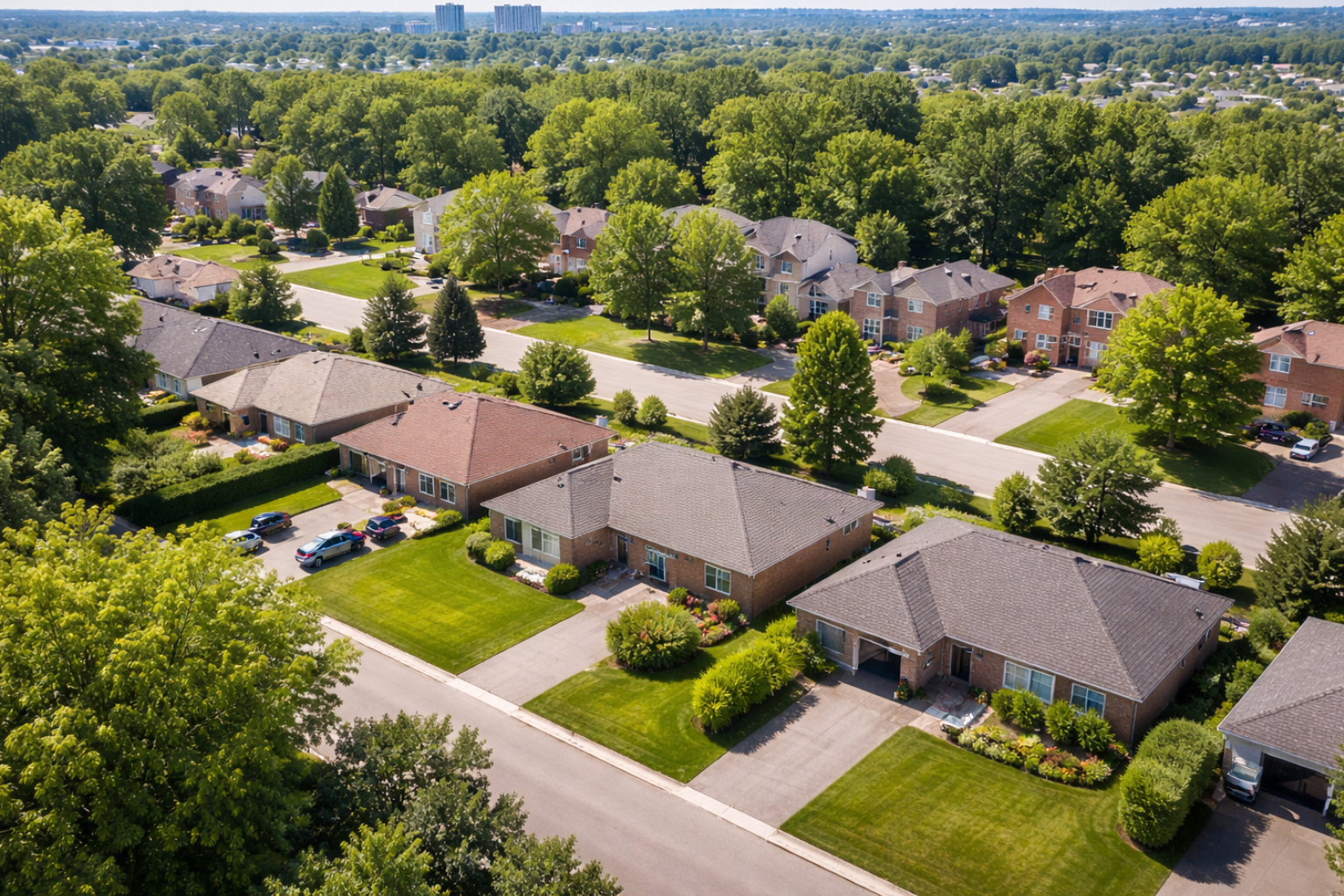
For downsizers, bungalows are the headline desire but the region’s bungalow experience is shaped by age of housing stock and where new supply actually shows up. In the Kitchener-Cambridge-Waterloo census metro area, a large portion of occupied dwellings were built before 1980 (a period that includes many of the classic “true bungalows”), which has real implications for inspection, renovation budgets, and long-term maintenance planning.
Bottom line: a successful downsize here starts with a clear, realistic “Financial Domino” so you can confidently answer, “What does this move actually fund?”
The bungalow inventory reality: older in-city supply vs newer edge supply
If you’re bungalow-focused, here’s what tends to be true in this region:
Many “classic” bungalows are tied to older housing eras
In the Kitchener-Cambridge-Waterloo metro area, a large count of occupied private dwellings were built 1960 or before (39,870) and 1961–1980 (58,060).
That doesn’t mean “every older home is a problem.” It means:
- inspections matter more,
- renovation budgets should be realistic (roofing, electrical panels, plumbing, windows), and
- the phrase “it’s been well maintained” needs to be backed by documentation.
Even at the census level, there are dwellings that report needing major repairs, reinforcing why a bungalow plan should include a maintenance/repair buffer.
Newer “bungalow-style” inventory can show up differently than people expect
In many Ontario markets, new supply over the next few years is constrained by higher costs and weaker demand in certain segments, especially where condominium project pipelines depend on presales. In its 2026 Housing Market Outlook, Canadian Mortgage and Housing Corporation highlights that housing starts continue to slow in 2026, with reduced condo presale activity limiting new condo construction over the next few years.
For downsizers, the practical takeaway is simple:
- if your plan depends on “I’ll just buy a brand-new bungalow in the city,” that option may be scarcer than expected;
- newer low-maintenance options may show up as townhomes, condo products, or edge-of-market developments, depending on year and location.
So the inventory question becomes:
Do you want an older, established-neighborhood bungalow (with potential updates), or a newer low-maintenance product (which may not be a traditional bungalow)?
Kitchener, Waterloo, and Cambridge: lifestyle considerations that change the decision
In this region, downsizing decisions are often less about city pride and more about daily friction: access to healthcare, transit, walkability, and what you want your week to look like.
Here are practical lenses to use.
Healthcare access and “future-proofing”
Most people don’t downsize because of today’s mobility, they downsize to reduce risk for the next decade.
The Region of Waterloo lists major hospital resources including the Waterloo Regional Health Network (sites in Kitchener) and Cambridge Memorial Hospital.
That matters because healthcare proximity isn’t just about emergencies; it’s about specialist appointments, diagnostics, and convenience for family support.
Transit, walkability, and the “one-car question”
If your downsize goal includes driving less, transit becomes a real variable.
Grand River Transit describes the ION light rail as running between Waterloo and Kitchener with multiple stations, and connecting to an ION bus route to Cambridge (with planned Stage 2 conversion).
So, broadly:
- some downsizers prefer being closer to the rapid transit spine (for errands, events, and family visits),
- others choose quieter pockets where transit is less central.
Amenities, community feel, and resale confidence
A practical way to frame “neighborhood choice” is the resale test:
If you needed to sell again in 5–10 years, would the home still appeal to a broad buyer pool?
The local market data shows more balanced conditions than a year earlier in several categories (for example, higher months of inventory and longer days on market in late 2025). In more balanced markets, the resale test becomes even more important:
- location quality,
- layout usability (true main-floor living),
- condo fee reality (if applicable),
- and the home’s “next buyer” appeal.
When to stay in-region, when to look outside, and when to go deeper by city
Here’s the concise decision guidance (educational, not prescriptive):
Staying in the region often makes sense when
- your support network (family, friends, care providers) are here,
- healthcare proximity is a priority,
- you want access to established amenities and community routines, and
- you can find the right home type without forcing the budget.
Looking outside the region often makes sense when
- your purchase budget is tight relative to your “must-haves,”
- you want newer low-maintenance options that may be more available in edge markets,
- you’re willing to trade proximity for more house or a different lifestyle.
What You Should Know
Downsizing in the Waterloo Region is not a single decision; it’s a sequence of market reality + inventory reality + financial reality. In early 2026, local benchmark and MLS-based reporting shows softer year-over-year pricing in key areas (including Cambridge and the combined Kitchener–Waterloo benchmark) and more “time to think” than the fastest years, which changes how you should plan and negotiate.
The second reality is bungalow-specific: many of the region’s classic, in-city bungalows are tied to older housing eras, which tends to shift the conversation from “smaller” to “right”, right layout, right condition, right maintenance burden, and the right budget for updates. And while it’s completely normal to want a clean, low-maintenance next home, the purchase-side math (closing costs, land transfer tax) is exactly why downsizing works best when the numbers come first.
If there’s one BungalowBOSS takeaway, it’s this: don’t shop until you’ve built your domino. Once you know your realistic sale range, estimated net proceeds, and your all-in buy costs, your next steps become clearer; whether you stay in-region, look just outside, or split your strategy by city.
If you’re considering downsizing and want a plan you can actually trust, the next step is a Financial Domino Meeting; a numbers-first conversation to map out what your move looks like before you make emotional decisions in the home search.
Check out this article next